




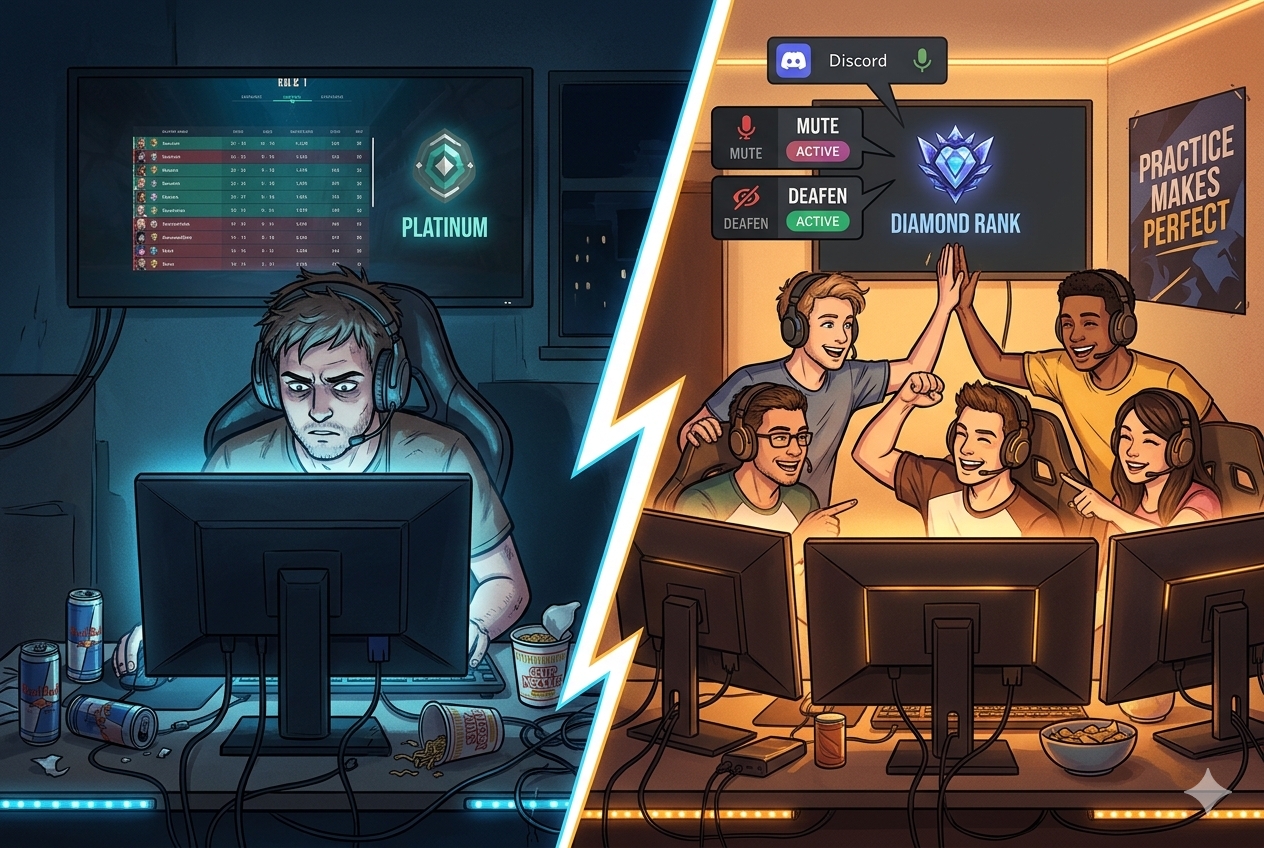
Esports solo queue hits different the second you click “Find Match” alone at midnight. Your stomach tightens before the loading screen even finishes. Invite four friends into a Discord call on a Friday evening, though, and that exact same game turns into a comedy show mixed with tactical chaos.
Anyone who spends time in competitive titles like VALORANT, Counter Strike 2, or League of Legends knows this split personality well. On paper, the map, the weapons, and the rules stay identical. In practice, queuing up alone and playing with a full squad don’t even feel like the same video game.
Why Esports Solo Queue Feels Like a Survival Test
When you enter esports solo queue, your biggest opponent often sits on your own side of the scoreboard. You get matched with four strangers who bring different habits, different moods, and completely different ideas about how to win.
Communication breaks down fast. One teammate has every voice channel muted. Another screams callouts after dying in the first ten seconds. Someone else locks a comfort pick that leaves your roster with zero utility. You can’t rely on set plays or clean crossfires because nobody knows what the person next to them will do next.
That uncertainty forces you to play differently. You watch the minimap twice as hard, hold onto your own utility for emergencies, and assume nobody is watching your flank. Winning alone rarely looks pretty. It rewards adaptability, quick reads, and the patience to keep your cool when a winnable match spirals into chaos.
How Playing With Friends Changes Everything
Queue up with a regular group of friends, and the entire pace of the match shifts. You already know who plays aggressively, who prefers anchoring a site, and who panics when three enemies rush through a smoke.
Trust replaces guesswork. If you ask a friend to flash a corner so you can swing wide, that flash arrives right on time. When someone whiffs an easy shot, nobody starts typing insults in team chat. You laugh it off, reset your economy, and call the next round.
Playing in a coordinated stack also brings everyday gamers closer to how real tournament rosters operate. Matches become less about individual hero plays and more about timing, spacing, and trading kills. Even a tough overtime loss feels rewarding when everyone executed the plan together.
What Each Mode Actually Teaches You
Players love arguing over which path proves real skill. Some claim squad players get carried by friends, while others say solo grinders never learn real teamwork. The truth sits somewhere in the middle, because both environments build completely different muscles:
- Solo queue sharpens individual awareness. Without friends calling out enemy positions, you learn to track timers, read rotations off tiny audio clues, and fix weak gaps in your defense on your own.
- Playing with friends builds real tactical discipline. You learn how to layer utility, bait opponents into crossfires, and play selflessly so a teammate can secure the round.
- Each mode tests your mindset in a unique way. Grinding alone teaches emotional control when random teammates tilt, while playing in a group forces you to accept honest feedback from people you actually know.
- Pacing changes dramatically between both queues. Strangers tend to rush early fights out of impatience, whereas coordinated squads slow the clock down and punish sloppy defenders.
Finding the Right Balance for Your Climb
If you only ever play in a comfortable group, you’ll easily miss bad habits that friends politely ignore. On the flip side, spending every evening in esports solo queue can burn you out until competitive gaming feels like a second job rather than a hobby.
The smartest approach is treating both queues like separate training tools. Jump into solo matches when you want to test your raw mechanics, decision making, and composure without a safety net. Then bring those sharper instincts back to your squad nights, where communication and chemistry turn good players into a dangerous team. Climbing the ladder matters, of course, but having a crew to celebrate the clutch rounds with is why most of us keep logging back in.

Swarnava Chakraborty writes about esports, gaming and business news for The Pop Sports, covering competitive tournaments, game culture and market updates.