




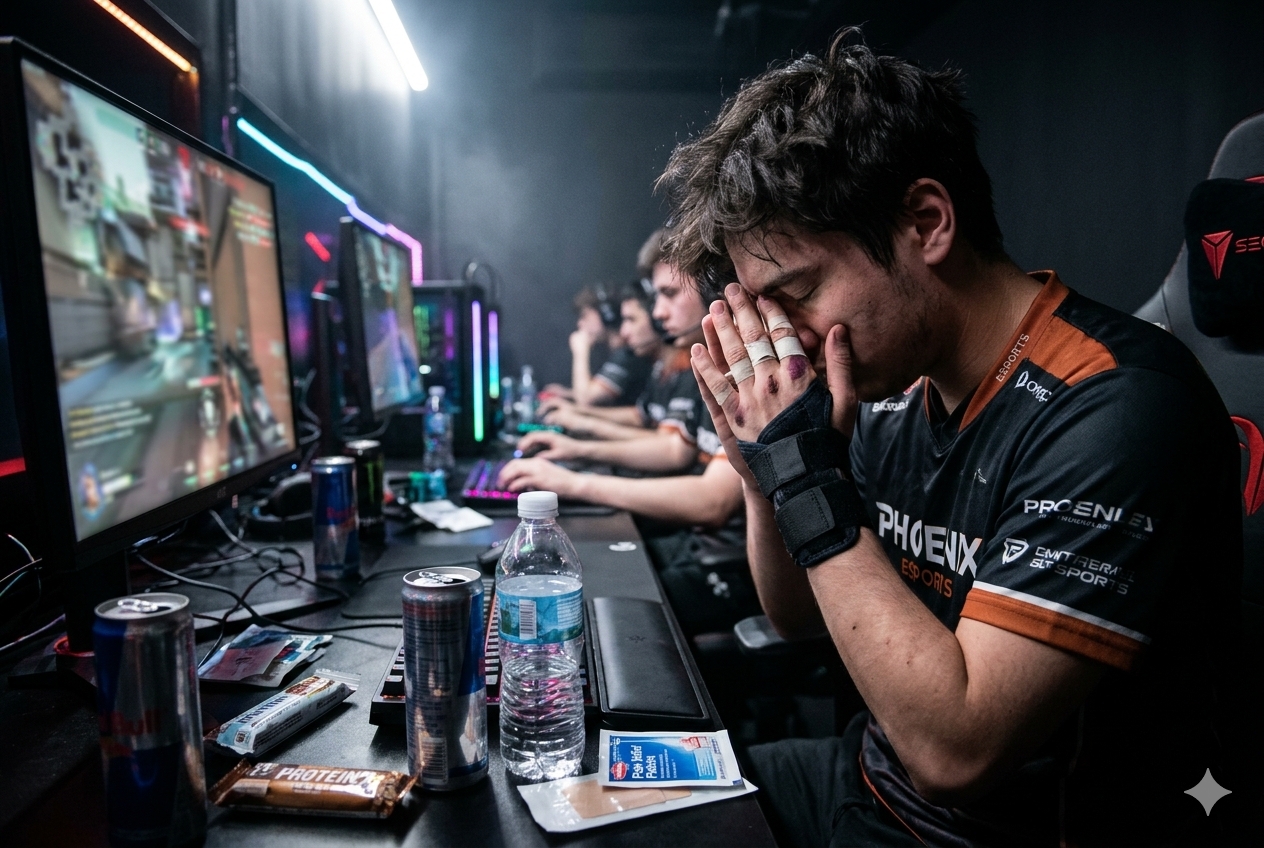
Esports player health has become one of the biggest talking points in competitive gaming because the daily grind pushes both the body and the mind to their limits. From the outside, playing video games for a living looks like a dream job. You sit in a comfortable chair, play your favorite title, and compete for massive prize pools. The reality behind the scenes is much tougher.
Most tier-one pros don’t just play for fun. They clock ten to twelve hours a day between team scrims, solo queue practice, and reviewing match footage. Over months and years, that schedule leaves a serious mark.
The Daily Physical Grind
Sitting still for half the day takes a quiet, heavy toll on the human body. Pro players perform hundreds of precise mouse clicks and keystrokes every minute. That constant repetition puts massive strain on the wrists, forearms, and fingers, often leading to stiffness, inflammation, or career-ending repetitive strain injuries.
Posture is another major battle. When a match gets intense, players naturally lean forward toward the monitor. Hours of slouching create tight shoulders, lower back aches, and stiff necks. On top of that, staring at high-refresh-rate screens in dimly lit rooms causes dry eyes, blurred vision, and nagging headaches by the end of the night.
Mental Burnout and Constant Pressure
The mental side of competitive gaming is arguably even harder to manage. Unlike traditional sports with long off-seasons, esports titles change constantly. A single patch can wipe out months of practice overnight, forcing players to relearn the meta while trying to keep their roster spot.
Job security is razor thin. One bad tournament can spark brutal criticism on social media, and teams frequently swap players mid-season. Combine that anxiety with late-night practice schedules and international flights across time zones, and sleep quality falls apart fast. Without proper rest, reaction times slow down, decision-making gets sloppy, and burnout sets in before a player even hits their mid-twenties.
Practical Non-Medical Ways to Protect Esports Player Health
You don’t need a massive team budget to build healthier habits around gaming. Simple daily adjustments can go a long way toward protecting esports player health and extending a competitive career:
- Follow the 20-20-20 Rule: Every 20 minutes, look at an object at least 20 feet away for 20 seconds. It gives your eye muscles a quick reset and cuts down on screen fatigue.
- Stretch Between Matches: Take five minutes between games to stand up, roll your shoulders, and gently stretch your wrists and forearms. Moving blood through those joints helps prevent stiffness.
- Fix Your Ergonomics: Keep your monitor at eye level so your neck stays neutral. Adjust your chair so your feet rest flat on the floor and your elbows sit comfortably at a 90-degree angle.
- Move Your Body Daily: Even 20 to 30 minutes of brisk walking, cycling, or light resistance training counters the effects of long sitting sessions and sharpens mental focus.
- Swap Energy Drinks for Water: Heavy caffeine gives a short spike followed by a hard crash that wrecks sleep. Staying hydrated with water and eating balanced meals keeps energy steady through long tournament days.
- Protect Your Sleep: Shut off bright screens at least 45 minutes before bed so your brain can actually wind down.
At the end of the day, raw mechanical skill only gets you so far. The pros who stay on top for years aren’t the ones pulling all-nighters until their wrists give out. They’re the ones who treat rest, movement, and mental recovery as part of their training. Whether you’re chasing a pro contract or just grinding ranked after work, taking esports player health seriously is the smartest way to stay sharp and keep enjoying the game.
Disclaimer: The tips above are general, non-medical lifestyle suggestions for informational purposes only. They are not a substitute for professional healthcare. If you experience persistent wrist pain, numbness, chronic headaches, or severe mental burnout, please consult a qualified medical practitioner or physiotherapist.