



Tulsi in Winter:
When winter settles over India, it brings more than just crisp mornings and cozy sweaters, it also ushers in the familiar wave of seasonal colds, scratchy throats, nagging coughs, and sluggish energy. Long before pharmacy shelves were stocked with immunity supplements, Indian households turned to a trusted staple sitting right in their courtyards: Tulsi (Holy Basil).
Revered for centuries as the “Queen of Herbs,” Tulsi for winter immunity isn’t just kitchen folklore. Today, modern science backs up what Ayurveda has known all along: this humble aromatic plant packs serious antiviral, antibacterial, and adaptogenic power, making it one of the easiest ways to safeguard your health when temperatures drop.
What Makes Tulsi So Effective?
Known scientifically as Ocimum sanctum (or Ocimum tenuiflorum), Tulsi is rich in active plant compounds like eugenol, linalool, limonene, and protective flavonoids. In India, you’ll commonly come across three main varieties—Rama Tulsi (bright green leaves), Krishna Tulsi (deep purple leaves), and Vana Tulsi (wild variety), each offering potent medicinal benefits.
Why Your Body Needs Tulsi Most in Winter
Cold weather naturally slows down our metabolism and can leave our immune defenses vulnerable to viral infections. Adding Tulsi (Holy Basil) to your winter routine supports your body right where it needs it most:
- Protects Your Airways: Its natural antimicrobial and antiviral properties help soothe sore throats, clear nasal congestion, and ease seasonal coughs.
- Strengthens Immune Defenses: Clinical research shows that phenolic compounds in Tulsi activate key antioxidant enzymes like glutathione and catalase, helping your cells fight off oxidative stress and seasonal viruses.
- Calms Stress and Winter Sluggishness: As a natural adaptogen, Tulsi helps regulate cortisol (your primary stress hormone), lifting mental fatigue and supporting deeper sleep.
- Reduces Inflammation and Supports Heart Health: Regular use helps ease mild winter joint stiffness while supporting healthy blood sugar, blood pressure, and cholesterol levels.
3 Easy Ways to Add Tulsi to Your Daily Routine
The secret to getting the most out of Tulsi benefits in winter isn’t taking a massive dose once you already feel sick—it’s small, consistent daily habits:
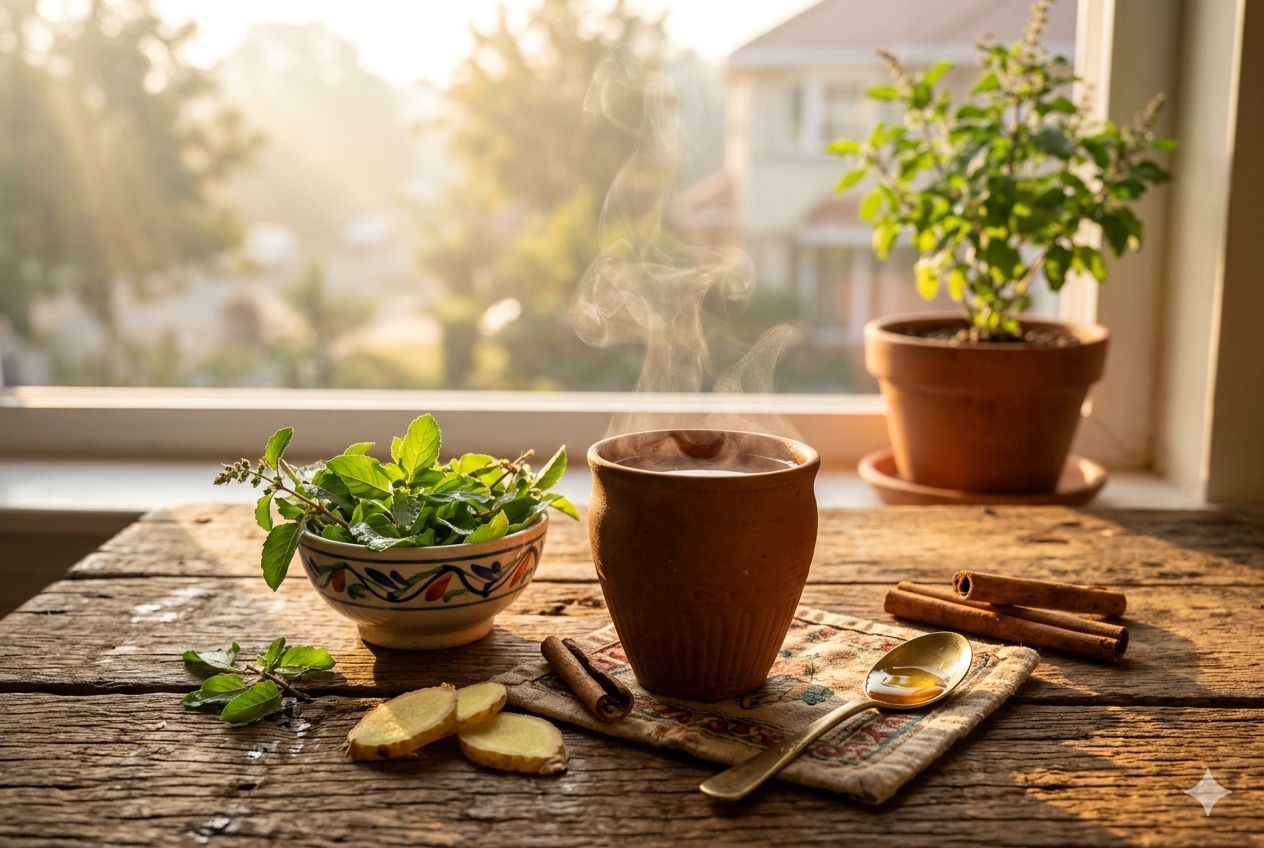
- Brew a Warming Kadha or Tulsi Tea: Simmer fresh Tulsi leaves with crushed ginger, black pepper, and a pinch of turmeric. Sipping this warm decoction keeps your body warm from the inside out and soothes irritated throats.
- Chew Fresh Leaves Every Morning: Start your day by chewing 5 to 6 clean, fresh Tulsi leaves on an empty stomach, or toss them directly into your morning tea.
- Try Tulsi Powder or Drops: If fresh leaves aren’t handy, organic Tulsi powder, drops, or capsules offer a convenient alternative. Just stick to recommended dosages—and check with your doctor if you take regular medication for blood sugar or blood pressure.
By making a simple cup of Tulsi tea or a few fresh leaves part of your morning ritual, you give your body a natural, time-tested shield to stay energized and resilient all winter long.