




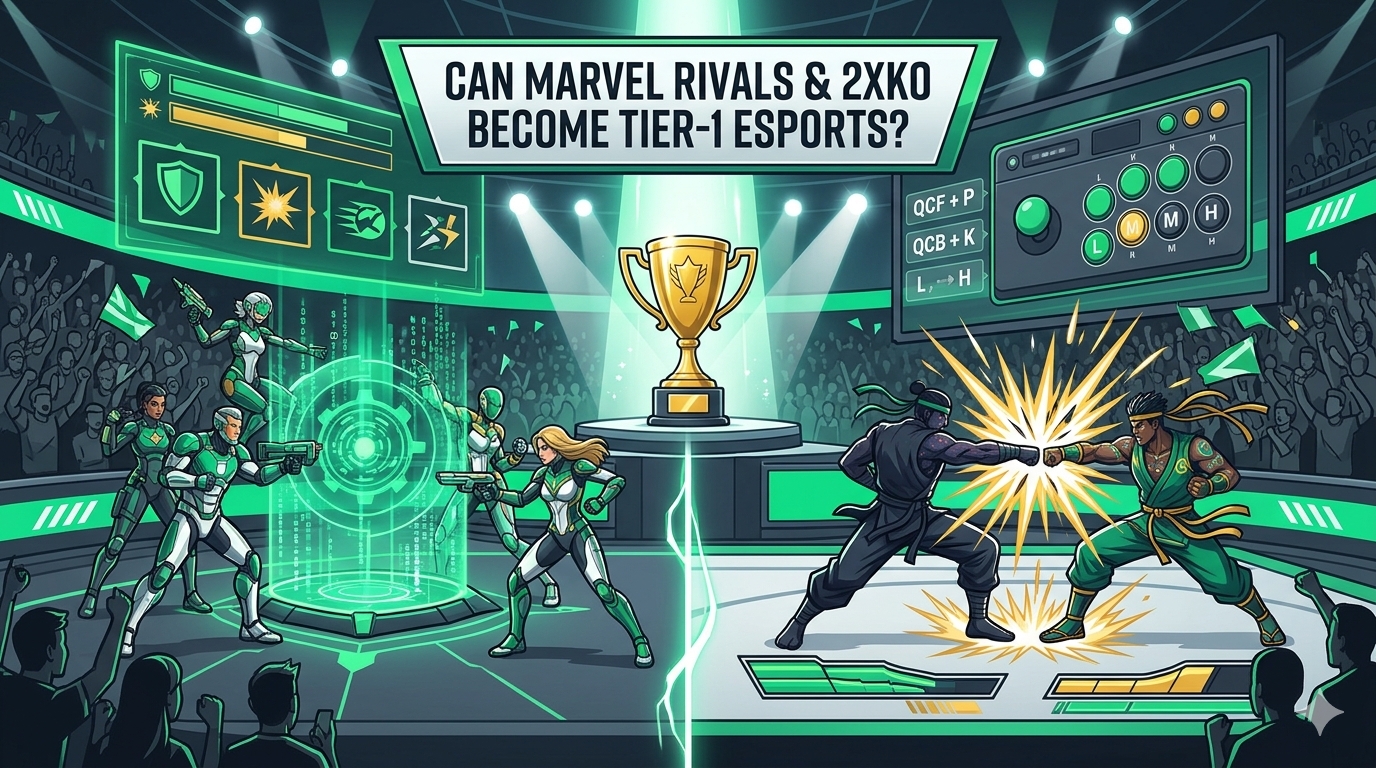
Breaking into tier 1 esports is one of the hardest feats in modern gaming. Fans already spend their weekends watching Counter Strike 2, League of Legends, and VALORANT, leaving very little room on the calendar for newcomers. Over the past year, two ambitious challengers stepped onto the stage with massive hype behind them: NetEase’s hero shooter Marvel Rivals and Riot Games’ tag team fighter 2XKO. Both games arrived with famous characters, deep pockets, and big competitive promises. Yet their journeys in 2026 show just how differently those bets can play out.
What It Really Takes to Reach Tier 1 Esports
It is not always launching a popular multiplayer game, but building a sustainable competitive ecosystem that lasts for years is is the key to success.
To sit at the top table alongside established giants, a game needs three things working together. First, it needs millions of everyday players who keep logging in months after launch. Second, matches must be easy enough for casual viewers to follow on stream without memorizing every ability icon. Third, major esports organizations need clear financial reasons to sign rosters, hire coaches, and fly players to international LAN events. Without all three pillars, even the loudest launch hype fades fast.
Marvel Rivals Found Its Footing Fast
Marvel Rivals walked into the arena with an obvious advantage. Almost everyone already knows Spider Man, Iron Man, and Magneto, so casual viewers immediately understand who’s doing what during a chaotic teamfight.
More importantly, NetEase backed that mainstream appeal with a serious tournament structure. The Marvel Rivals Ignite 2026 circuit put more than three million dollars on the table across regional leagues in the Americas, EMEA, China, and the Pacific. That road led directly into a one million dollar Grand Finals at DreamHack Stockholm in November 2026.
When powerhouse organizations like Natus Vincere, Virtus.pro, 100 Thieves, and Gen.G Esports commit to a scene, fans take notice. Fast six versus six clashes, smart hero bans, and creative team up abilities give broadcast talent plenty of strategy to break down while keeping matches exciting for first time viewers.
Why 2XKO Hit a Wall Despite Riot Backing
On paper, 2XKO looked like a sure bet. Riot Games spent years developing a free to play two versus two tag fighter set in the League of Legends universe, then sponsored twenty global tournaments across 2026. The schedule featured major fighting game stages like Evo, Evo Japan, Combo Breaker, and CEO. Top competitors loved the deep mixups, assist combos, and unique duo play format where two teammates control one squad together.
Still, tag fighters remain a tough sell for wider gaming audiences. Matches move at blistering speed, a single dropped block can cost half a health bar, and new players often bounce off the steep learning curve. In August 2026, Riot confirmed that active development on 2XKO will end in December 2026 after its final official competitive events wrap up in November. Servers will remain online and community organizers can keep running local brackets, yet the push to turn 2XKO into a massive tier 1 Riot circuit ended before its second year even began.
Key Lessons for Every New Competitive Game
Watching one newcomer surge toward major arena finals while another scales down offers clear lessons for the wider industry:
- Spectator clarity beats raw complexity. Audiences stick around when they can read the flow of a match within ten minutes of tuning in.
- Casual retention powers the pro scene. A healthy competitive ladder depends on a massive base of everyday players, not just a dedicated niche of tournament veterans.
- Big organizations follow predictable roadmaps. Teams invest in rosters when publishers lay out structured seasons, partner support, and global LAN finals.
- Famous characters alone can’t carry a genre. Even beloved champions from Runeterra couldn’t overcome the punishing entry barrier of a tag team fighter.
The contrast between these two titles tells you everything about competitive gaming today. Marvel Rivals proved that a fresh hero shooter can storm into tier 1 esports when accessible gameplay meets steady tournament backing. Meanwhile, 2XKO stands as a sobering reminder that even the biggest studio in esports can’t force a genre into the mainstream if everyday players don’t stick around.

Swarnava Chakraborty writes about esports, gaming and business news for The Pop Sports, covering competitive tournaments, game culture and market updates.