



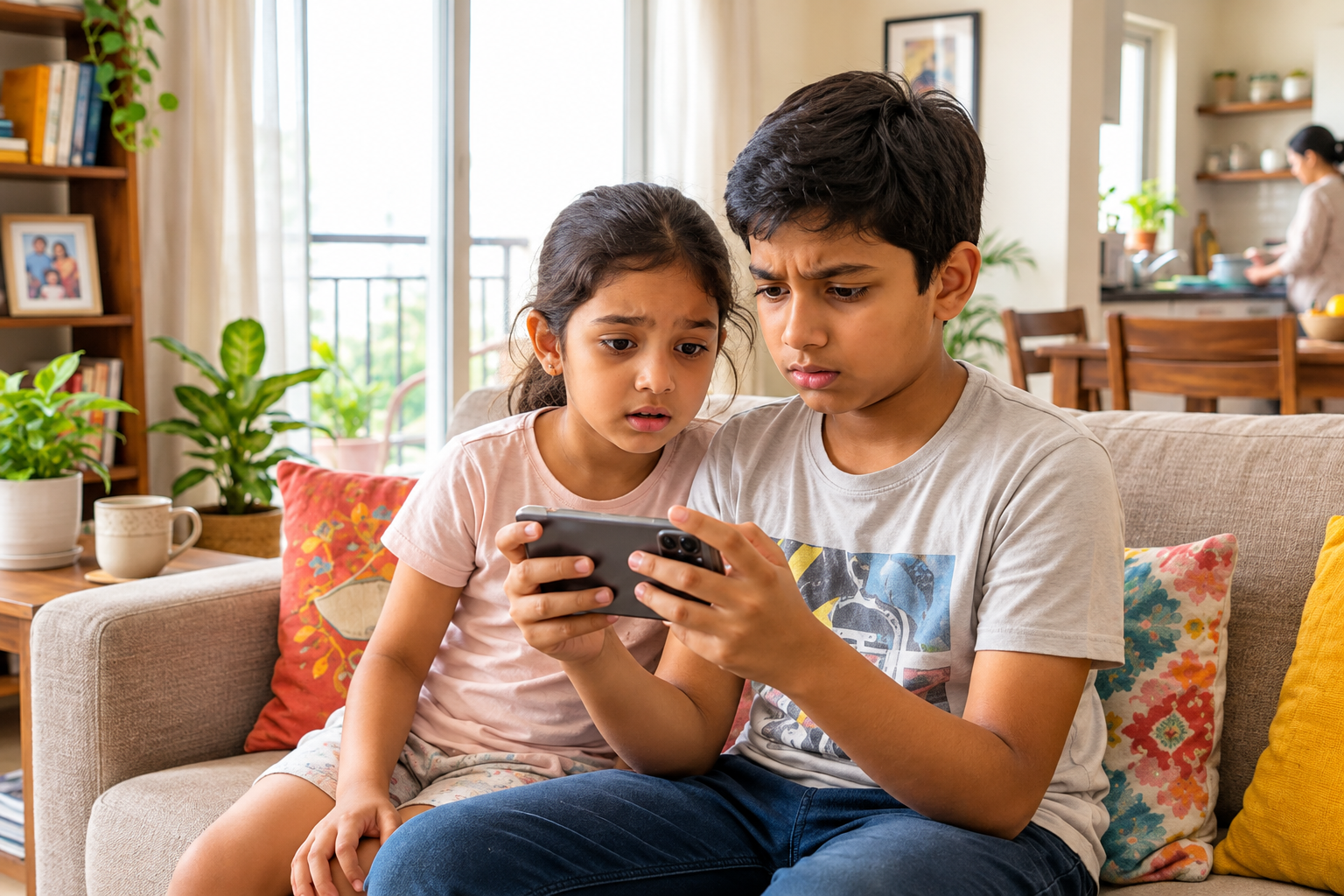
In today’s digital era, the world of children has changed a lot. Instead of going out and meeting new people and understanding their culture, they are watching the whole world on the mobile screen itself. A big disadvantage of this is that any misleading video or fake news on the Internet is accepted by the children without thinking.
If a foreigner is seen misbehaving in a viral video, children often form the same negative opinion about the entire country or the community.
Shocking statistics of Japan’s research
Norihiro Nihei, a professor of social sciences at the University of Tokyo, recently conducted a survey of about 2,000 children from 10 government schools. The results are very alarming. In the survey, 41.5% students clearly believed that the increase in the population of foreigners would not benefit their society. It is worth noting that in the year 2022, the number of children who thought so was only 22.2%. That is, within just three years, the number of school children who are biased towards the people of other countries has almost doubled.
Social media behind the brainwash
Where is this change coming from in children’s thinking? More than 42% of children in the age group of 6 to 12 years are active on social media. As children are 13 years old, this number jumps to 92.9%.
Geoffrey Hall, lecturer at the Kanda University of International Studies, explains that content against foreigners is repeatedly exposed on social media, which has a profound impact on children’s minds. On the contrary, the International Association for the Evaluation of Educational Achievement says that the students of schools that teach children to live together and mutual trust are more sensitive to foreign migrants and have less hatred in their minds.
The situation in India is changing rapidly.
This problem is not limited to Japan. In India, about 90% of children in the age group of 14 to 16 years also have smartphones in their homes. Of these, 76% of these children use a lot of social media. Sticking to the screen has reduced his face-to-face interaction with people in the real world.
Children caught in the trap of fake news
According to an online safety survey by UNICEF India, 40% of people believed that they spend more than 4 hours on the internet throughout the day. In such a situation, it has become very important to give children a correct ‘digital understanding’. A report by ‘Youth Time Japan’ suggests that about 32% of high school boys and 42% of girls have fallen prey to false information on the internet. Of these, 29% of boys and 40% of girls also believed that they do not have the confidence to recognize the difference between real and fake news.
In today’s era of Artificial Intelligence (AI), it has become even more difficult to know the truth of any video or photo. Researcher Mizuki Nakahara, who has worked on anti-racism education, makes it clear that in today’s time there is a dire need to provide education inside schools so that children can easily recognize the hatred and lies being spread against foreigners on the Internet.