




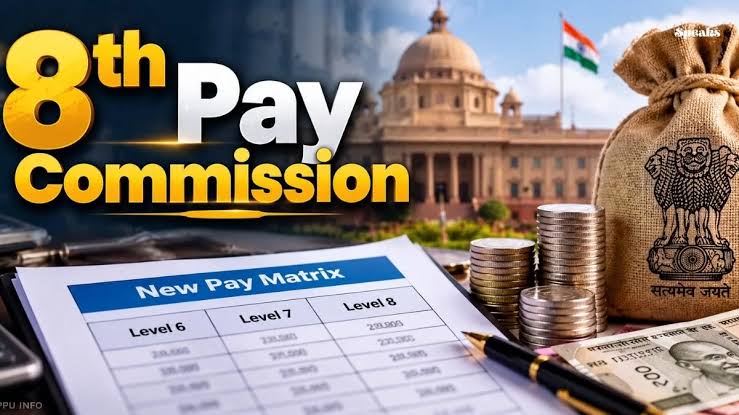
Will employees who retire before the implementation of recommendations receive arrears and enhanced pension benefits? How to understand the calculations
Millions of central government employees and pensioners are currently awaiting the recommendations of the Eighth Pay Commission and the government’s subsequent actions. A key question arises: if an employee retires before the Eighth Pay Commission’s recommendations are officially implemented, will they be eligible for salary arrears and the benefits of a revised pension? Furthermore, there is an expectation for clear guidelines regarding pension increases for those who retired before January 1, 2026.
New pay structure likely to be effective from January 1, 2026
Based on administrative precedents and the procedures followed by previous Pay Commissions, it is anticipated that the government will implement the revised pay structure under the Eighth Pay Commission, effective from January 1, 2026. If the government decides to apply these changes with retrospective effect, employees who retired prior to the official notification of the recommendations could also receive significant financial benefits.
Understanding arrears and pension calculations through an example
This can be easily understood with a practical example. Suppose a central government employee retires in 2027, and subsequently, the government issues a notification implementing the Eighth Pay Commission’s recommendations, effective from January 1, 2026. In such a scenario, the employee could receive the difference between their previous salary and the new, revised salary for the period from January 1, 2026, up to their date of retirement in 2027—essentially, the full amount of arrears. Additionally, their pension could be recalculated based on this final revised salary. However, these benefits will depend entirely on the government’s final directives and the specific terms and conditions regarding the payment of arrears.
Concerns of current pensioners and a letter to Prime Minister Modi
The scope of the Eighth Pay Commission includes a review of both the salaries of current employees and the pensions of retirees. If the government accepts the recommendations of the commission regarding pension revision, the monthly pension amount for those who have already retired could also increase.
Expressing concern over this matter, the ‘Retired Employees Welfare Association’ (REWA) sent a letter to Prime Minister Narendra Modi in September 2026. The association has demanded that those who retired before the effective date of the new rules should also be explicitly included under the purview of the 8th Pay Commission.
Demand for changes to the ‘Terms of Reference’
The association has called for necessary amendments to the commission’s ‘Terms of Reference.’ Their objective is to ensure that pensioners and family pension recipients who retired before January 1, 2026, are fully integrated into the pension revision process. This demand stems from the apprehensions of millions of elderly pensioners, who fear that a specific cut-off date for retirement might exclude them from the benefits recommended by the new pay commission.
Awaiting an official government notification
At present, it is not entirely clear what formula will be used to determine benefits for those who retired before the recommendations take effect or for those currently receiving a pension. The payment of arrears and eligibility for a revised pension depend entirely on the commission’s final report, approval from the Union Cabinet, and the final directives issued by the Ministry of Finance. Therefore, employees and pensioners must wait for an official government decision before any conclusions can be drawn.