



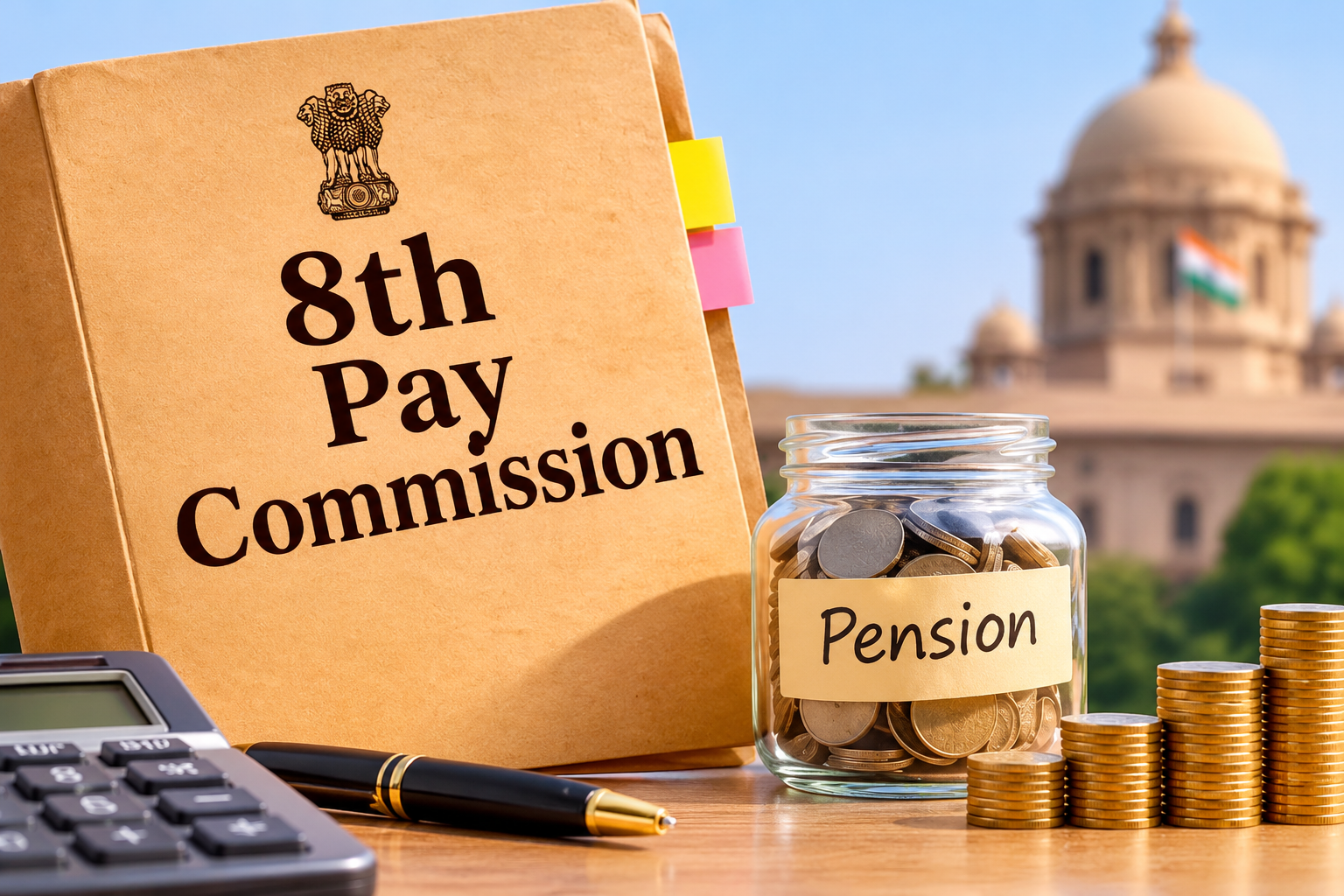
If there is a delay in implementing the 8th Pay Commission by 2028, it may only provide relief on government spending for a short period of time, but the accumulation of arrears will eventually increase the financial burden on the central government. According to a report by Deutsche Bank Research, the 8th Pay Commission could increase government spending by at least Rs 3 lakh crore, which could create difficulties in the financial year 2028 (FY28) in the central government’s fiscal consolidation schemes.
Deutsche Bank, in its 2027 ‘World Outlook’ report titled ‘Great Expectations, But Risky Business’, has estimated that the central government’s fiscal deficit (Fiscal Deficit) could be 4.3% of GDP in FY2028. Apart from the change in salary, the continuous high crude oil prices, rising subsidies and a possible decrease in dividends from the Reserve Bank of India (RBI) could put more pressure on the exchequer.
It is to be noted that the estimated expenditure on the 8th Pay Commission is slightly higher than the RBI’s dividend transfer of Rs 2.9 lakh crore estimated by Deutsche Bank for FY2027 (FY27). However, these estimates and figures are related to different financial years.
Why can arrears grow?
Deutsche Bank has categorically stated that delaying the postponement or implementation of the recommendations of the 8th Pay Commission to 2028 may provide financial relief to the central government for some time, but the total amount to be paid later will increase. The Deutsche Bank’s remarks put a further emphasis on the Centre to implement wage revision within the stipulated time frame under the Terms of Reference (TOR) of the 8th Pay Commission.
If the pay revision is implemented retrospectively, the period of the arrears may be longer if delayed. The result will be that when these recommendations are implemented later, the central government will be burdened with a huge payment. The premier banking institution expects the central government to consider implementing the recommendations of the 8th Pay Commission from next year, i.e. 2027. Nevertheless, the actual date of implementation, the date of its effect and the arrangement of payment of dues, all these things will depend entirely on the decision of the central government.
In addition, Deutsche Bank estimates that in FY2027, the central government will achieve its fiscal deficit target of 4.3% of GDP. A dividend of Rs 2.9 lakh crore from the RBI, a provision of Rs 1 lakh crore under the Economic Stabilization Fund, a possible reduction in capex and the amount from better-than-expended disinvestment can help in meeting this goal.
Economic growth can be boosted.
Increasing the income of central government employees can support domestic consumption and demand. Deutsche Bank has projected India’s real GDP growth at 7.3% in FY20, 7.2% in FY2028 and 7.3% in FY 2029. The bank also said that despite the ongoing crisis in West Asia and a low-than-normal monsoon, the Indian economy remains strong and resilient. With just a few months left for the Union Budget 2027-28, the challenge before the central government is to accommodate the potential expenditure of the 8th Pay Commission as well as maintain financial discipline.
For central government employees and pensioners, this could mean that the decision and final report related to the 8th Pay Commission may be presented in a few months. According to the Terms of Reference (TOR), delaying it may reduce the immediate spending pressure on the central government, but if the revision in salary and allowances is implemented retrospectively, the outstandings to the employees can increase the financial burden on the central government in the future.

Rituparna Ghosh writes about Bollywood, trending stories and lifestyle for The Pop Sports, including Editors' Picks on health, travel and culture.